Define the product, target market and country sequence
The starting brief records product status, target population, pack and language variants, data needs, distribution channel and country sequence. Reimbursement, marketing authorisation and operational distribution remain distinct but coordinated workstreams.
Map reimbursement and market-access routes by country
Depending on the product, the plan considers AMNOG and G-BA processes in Germany, SÚKL pricing and reimbursement routes in Czechia and applicable EU HTA steps. Inter-Pharma does not replace legal, reimbursement or authority advice; it connects confirmed requirements with operational launch planning.
Prepare product data, listings and launch stock
Article and pack data, identifiers, price and distribution status, listing partners, inventory model and delivery milestones are combined in a controlled readiness plan. Launch begins only after data, ownership and interfaces are confirmed.
Qualify quality, logistics and partners
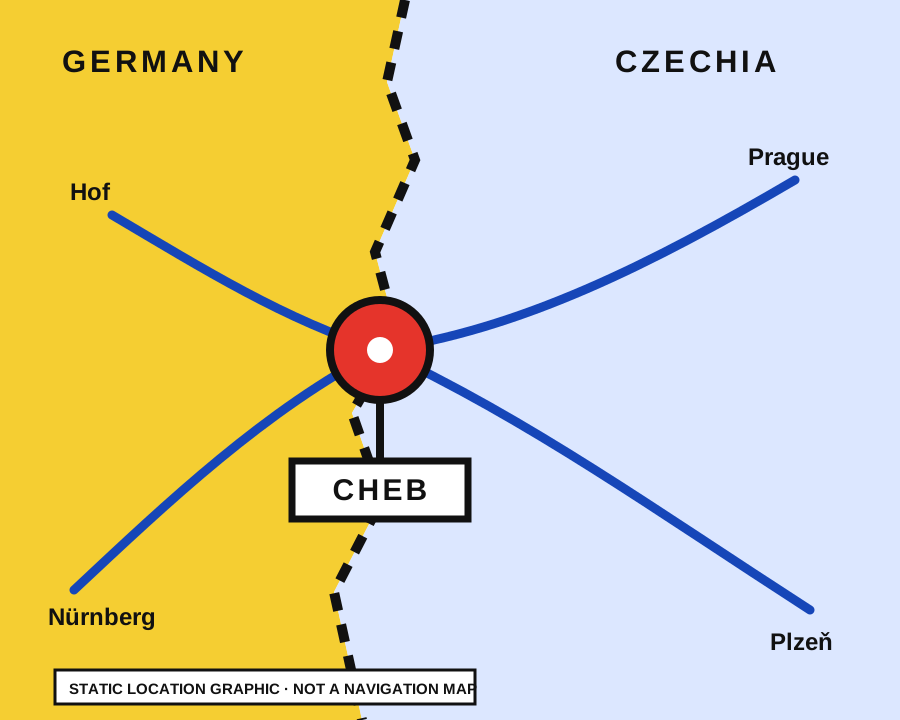
GDP requirements, storage and temperature profile, traceability, complaints, recalls, transport and quality agreements are clarified before the first order. Inter-Pharma's own warehousing and picking in Cheb are used only when product, authorisations and project scope fit.
Manage go-live and the first 90 days
A shared action plan links approvals, initial stock, order readiness, supply performance, escalation and review dates. Early market and delivery data are assessed against agreed objectives without promising availability or market success.
Operational market-entry hub for Germany and Central Europe
Inter-Pharma turns a planned market entry into an auditable operational launch plan. The focus is on product and status data, listings, launch stock, GDP-compliant warehousing and distribution, and post-launch supply performance—clearly separated from marketing-authorisation, HTA, pricing and reimbursement decisions.
20,000pallet positions at the site; available capacity is confirmed per project
2–3 weekstypical onboarding for larger projects once requirements and documentation are fully agreed
GDPprofessional oversight across all GDP-compliant activities
From country decision to stable routine supply
- 1 · Product and country profileDocument marketing status, MAH, indication, pack and language variants, target populations, markets and intended launch date.
- 2 · Pricing, reimbursement and authority pathwayTreat AMNOG/G-BA, SÚKL and applicable EU HTA steps as separate decision streams owned by the relevant experts and authorities.
- 3 · Data, listings and channelsConfirm product master data, identifiers, price and distribution status, wholesale partners, eligible recipients and order routes before the first order.
- 4 · GDP readiness and launch stockQualify temperature, batch, expiry, stock status, safety stock, quality agreement, recall, returns, deviation and transport handover as one process.
- 5 · Test, acceptance and go-liveTest normal, boundary and error cases for orders, inventory, blocking, interfaces and escalation. Go-live follows documented acceptance.
- 6 · First 90 daysMonitor supply performance, OTIF, inventory accuracy, backorders, temperature events and deviations against agreed targets.
Define the service boundary
Operational market access by Inter-Pharma
- Country, channel and launch-readiness matrix
- Product data, listings and initial stocking
- Own warehousing, inventory control, picking, pack checks and dispatch preparation in Cheb
- Coordination of qualified transport and specialist partners
- Returns, recall, deviation and post-launch supply processes
Outside our own scope
- Acting as marketing-authorisation holder or making authority decisions
- AMNOG benefit assessment, HTA dossier, pricing or reimbursement negotiation
- Legal advice or binding statements on behalf of authorities
- Manufacturing, repacking or labelling without a confirmed authorisation and project scope
- Guarantees of reimbursement, market share, lead time or commercial success
Updated: 19 September 2026 · Professionally reviewed by Martin Didunyk
Frequently asked questions about operational pharma market access
What is operational pharmaceutical market access?
It connects confirmed regulatory and commercial requirements with product data, listings, launch stock, GDP warehousing, order readiness and distribution. It does not replace marketing authorisation, HTA, pricing or reimbursement advice.
Why does warehousing matter for market entry?
A launch is supply-ready only when product status, temperature, batch, expiry, safety stock, recipients, interfaces and escalation are controlled in the warehouse process. Warehouse planning therefore starts before the first inbound delivery.
How quickly can a larger project start?
Once requirements, documentation, roles and interfaces are fully agreed, larger projects can typically be onboarded within two to three weeks. Product qualification, data migration and testing may alter the timeline.
How much warehouse capacity is available?
The site has 20,000 pallet positions in total. Available capacity, the appropriate storage zone and product acceptance are confirmed for each product and volume profile.
Which authorisations are required?
Requirements depend on product, activity, role, origin, target market and recipient. The MAH, wholesalers and other parties must evidence their specific scope; no blanket clearance is assumed.
How are returns and recalls managed?
Stock status, batches and recipients remain traceable. Blocking, retrieval, quarantine, assessment, reporting and final disposition follow the agreed quality and escalation process.
Does Inter-Pharma handle AMNOG or reimbursement negotiations?
No. Inter-Pharma maps these dependencies into the country and launch plan but does not replace formal benefit assessment, legal advice, pricing or reimbursement negotiation.
What is needed for an initial assessment?
Provide the product and marketing status, MAH and roles, target countries, pack variants, temperature, SKUs and volumes, launch date, channels and recipients, data and interface requirements, and the status of pricing, reimbursement and listings.